
Pontos
Location
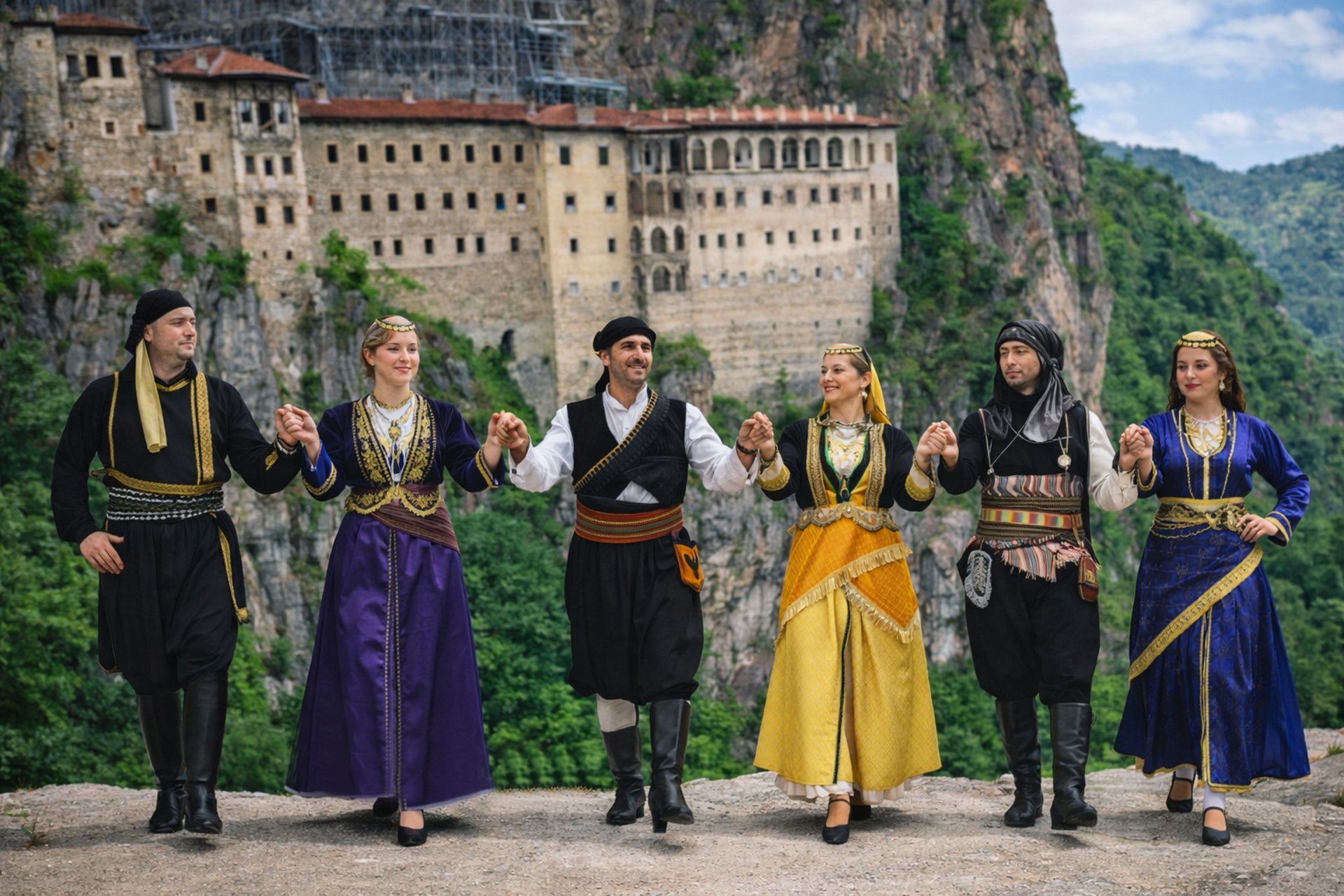
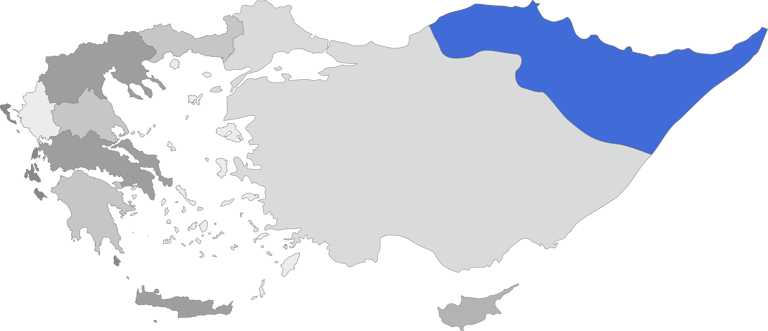
Pontus is the geographical zone of the northern coast of Asia Minor. It is bounded to the west by the Parthenios River in Bithynia, to the south by the Olgasis mountain range, to the east by Greater Armenia and to the north by the Black Sea, the present-day Black Sea. Since ancient times it has been an area of intense Greek colonization, and later became a kingdom under Mithridates. In the late Byzantine years it emerged again as an independent state. Until 1923 and the mandatory population exchange imposed by the Treaty of Lausanne, it was largely inhabited by Greek-speaking populations, mainly Christian, but also Muslim to a lesser extent.
Its geographical location made Pontus a meeting point of cultures and trade routes. This multicultural environment was also reflected in the dance style of the region. The body remains upright and stable, the shoulders relaxed, while the intensity and specificity of the movement are expressed through the characteristic swaying of the knees.
In Pontic dances, men and women usually form a closed circle, held mainly by the wrists and in some cases by the shoulders. This circular arrangement, where everyone participates equally without distinguishing a leading dancer, reflects basic social characteristics of the Pontic community. An exception is the Ak Dag Maten region, which borders Cappadocia and where open-circle dances are found, with obvious influences from the Cappadocian tradition.
The musical instruments that accompany Pontic dances are mainly stringed instruments, such as the lyre or kementze, wind instruments such as the flute (gaval) and the bagpipe (tulum), as well as percussion instruments, mainly the tambourine (taul) and the tambourine.
Info
Dances
Explore traditional Greek dances
Follow us
to always be informed.
subscribe
© 2025. All rights reserved.
Created by


Menu